

Expert Debt advice & solutions.
- Clear, professional debt advice
- Get your debt repayments under control
We’ll explain all fees and risks clearly, so you can make an informed decision.


To discover more about how to manage your debt and to receive free debt advice, you can visit www.moneyhelper.org.uk.
To discover more about how to manage your debt and to receive free debt advice, you can visit www.moneyhelper.org.uk.
How we helped Melissa
- Credit cards
- Payday loans
- Catalogues
- Buy now, pay later
Rising living costs led Melissa to use credit cards and payday loans for everyday essentials. Over time, she had 10 debts with monthly payments of more than £730.
After getting debt advice from MoneyPlus, Melissa set up a Debt Management Plan. Her monthly payment reduced to £133, based on what she could afford. This includes a management fee.
MoneyPlus asked her creditors to consider freezing interest and charges. This helped stop her debts from increasing. Melissa now has one affordable monthly payment and a clear plan in place.

£22,000
Total debt

£730
Old payment
£133
New payment
Read video transcript
Melissa: Before I got help, I felt like I was drowning.
I just couldn’t see any other way out.
If someone told me they were struggling, I’d tell them MoneyPlus really helps.
Ignore the shame.
Just get help and start feeling better.
I’d tell anyone.
Don’t be scared — there’s help there if you need it.

Simplify your debts
One affordable monthly payment, no more juggling debts

Breathe easier
2 in 3 people feel less stressed since getting support*

Personalised advice
97% say our advice fits their situation*
Simplify your debts
One affordable monthly payment, no more juggling debts
Breathe easier
2 in 3 people feel less stressed since getting support*
Personalised advice
97% say our advice fits their situation*
*MoneyPlus customer survey 366 respondents May 2025
How we help:
We know dealing with debt can feel like a lot. We keep things clear and straightforward, and our experts support you through each step.
Here’s how it works.
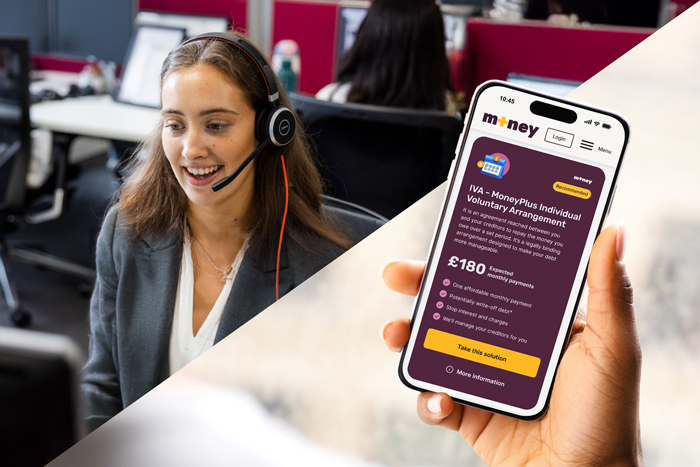
Contact us
Start online with our debt advice tool or speak with an expert advisor. We’ll listen to you and understand your debt situation.

Discover your options
We’ll tailor advice to your situation and recommend the best way forward. Whether that’s one of our plans or something else, we’ll always do what’s right for you.

Move forward
If a managed solution is right for you, we’ll contact your creditors and tell them you’re with MoneyPlus. If not, we’ll show you who can help.
We help with different debts, including…

Buy now, pay later

Credit card

Overdraft

Payday loan

Store card

Bank loan
Buy now, pay later
Credit card
Overdraft
Payday loan
Store card
Bank loan
Debt Solutions
An overview of each debt solution, the pros and cons and any fees.
Overview, Pros, Cons, Fees
Overview
A DMP is an informal arrangement that helps you combine your debt repayments into one affordable amount, allowing you to pay creditors back one month at a time. This monthly payment will be based on your budget and is calculated by taking your monthly incomings and outgoings into account.
After the reduced monthly rate has been calculated, it will be proposed to each of your creditors and if they accept it, you can make monthly debt repayments over an extended period of time. With a DMP, you only pay what you can afford so if your circumstances change then the monthly payment amount may be altered to reflect this.
As a DMP is an informal agreement, it isn’t legally binding. This means there is no minimum period you’re tied in with it and you or your creditors are free to cancel at any time.
Pros
Combined debt repayment
A DMP combines multiple debts into one affordable payment, making it easier to manage and helps avoid late fees from juggling multiple creditors.
Affordable payments
Your monthly payment is based on your income and expenses, ensuring you only pay what you can afford.
Potential to freeze interest
Your provider may negotiate with creditors to freeze interest and charges, helping you repay debt faster.
Less contact with creditors
Your debt advisor handles communications, reducing the number of calls and letters from creditors.
Not recorded on the Insolvency Register
Unlike IVAs or bankruptcy, a DMP isn’t publicly recorded, keeping your finances private.
Cons
No debt write-off
Unlike IVAs or bankruptcy, a DMP doesn’t write off debt. You must repay the full amount, often making it a more expensive option.
Longer repayment period
Since all debt must be repaid, a DMP can take years to complete, lasting longer than other debt solutions.
No legal protection
A DMP isn’t legally binding, so creditors can still contact you, stop the agreement or take legal action at any point.
Doesn’t cover all debts
DMPs only cover non-priority debts like credit cards, not priority debts which include things like rent, court fines and electricity bills.
Credit card accounts must be closed
Any credit card accounts included in your DMP must be closed and you may be advised to close others to avoid further debt.
Fees
The process of setting up a DMP involves various costs and so it’s normal for your DMP provider to charge you a fee to cover these. There are two main types of fees you might encounter with a DMP:
Arrangement fee
This one-time fee covers the setup of your DMP, including assessing your finances, drafting a payment plan, and negotiating with creditors. It can often be paid in instalments.
Monthly management fee
A monthly fee covers the ongoing management of your DMP, including liaising with creditors and providing continued support. This is typically a percentage of your payments but is capped at 50%.
Overview, Pros, Cons, Fees
Overview
Available to people in England, Wales and Northern Ireland, IVAs are a formal, legally binding agreement between you and your creditors that sees you pay towards your debts over a set time period.
An IVA operates under the Insolvency Act 1986 and the Insolvency Rules 2016 and, as such, your creditors will be bound by the law. An IVA typically lasts for around five or six years. Once it ends, any outstanding eligible debt included in the IVA, is written off.
While you are in an IVA, your creditors must stop chasing you for repayment and they are not permitted to charge interest on your debts. Any contact between you and your creditors goes through the Insolvency Practitioner (IP) working on your behalf.
During the IVA, you’re required to make agreed payments. This might be a monthly sum or a single lump sum.
Pros
Some debt may be written off
An IVA allows you to write off a portion of your debt once you’ve completed the agreed repayment term. This helps reduce the overall amount you need to repay.
Protection from creditors
Once an IVA is in place, creditors cannot take legal action against you or chase you for payments, offering relief from constant calls and letters.
Personal assets are protected
IVAs do not require you to sell your home but you may be required to sell your car if you have a high value vehicle.
Interest is frozen
During an IVA, interest and charges on your debts are frozen, meaning your repayments directly reduce what you owe rather than just covering interest.
Ongoing support
A licensed Insolvency Practitioner (IP) will manage your IVA, offering guidance and support throughout the repayment period to help you stay on track.
Cons
Your credit score will be impacted
An IVA remains on your credit file for six years, making it harder to obtain credit, including loans, mortgages, and credit cards.
Not all debts are covered
IVAs only apply to unsecured debts like credit cards and personal loans. Secured debts, such as mortgages or car finance, must still be repaid separately.
Strict budgeting is required
You must adhere to a set budget for the duration of your IVA, which can last up to six years, requiring significant lifestyle adjustments.
Your name is made public
An IVA is recorded on the Individual Insolvency Register, which can be accessed by anyone, including employers, landlords, and lenders.
Creditors must agree
For an IVA to go ahead, at least 75% of creditors (by debt value) must approve it. If they reject it, you may need to consider alternative debt solutions.
You must comply with the terms of the IVA
As an IVA is a legally binding agreement between you and your creditors, if you don’t stick to the terms of the IVA, the IVA may fail and an alternative solution will be needed.
Fees
At MoneyPlus, we never ask for upfront fees. Instead, these are covered by your monthly contributions. Before committing to an IVA, we’ll explain all fees and how they’re calculated.
There are three types of IVA fees:
Nominee’s fee
This covers setting up your IVA, including preparing your proposal and liaising with creditors. It is usually £2,100 but may be reduced by your creditors.
Supervisor’s fee
This covers ongoing IVA management, typically £2,100, although once again, your creditors may reduce it.
Disbursement costs
Miscellaneous expenses like third-party fees, insurance, legal advice, and property valuations.
Overview, Pros, Cons, Fees
Bankruptcy is a formal insolvency solution that means your outstanding debts are written off. Bankruptcy is available to people living in England, Wales and Northern Ireland. The equivalent for people living in Scotland is called Sequestration. A legally binding solution, it is intended for people who can’t repay their debts using income or assets in a reasonable period of time.
To declare bankruptcy, you will need to apply through the Insolvency Service in England and Wales, or through the High Court in Northern Ireland. Applying for bankruptcy will require an initial fee of £680. You can pay this in instalments, but you’ll need to have paid the full amount before you submit your application.
A decision on your application for bankruptcy will be returned to you within 28 days. Once declared bankrupt, the Official Receiver or Trustee in bankruptcy will look at the value of all your assets and any charges on them. They may ask for the assets to be sold or consider other options. These include your home, cars and all assets which will go towards paying back your outstanding debts.
Pros
Wipes away unsecured debts
Bankruptcy eliminates most unsecured debts, such as credit cards, personal loans, and payday loans, but there may be occasions when there are debts that are not discharged, such as debt obtained through fraud.
Stops legal actions
Once declared bankrupt, creditors can no longer take legal action against you, including court orders and bailiffs.
Living allowance
You’ll keep enough money to cover your everyday living costs and essentials during the bankruptcy process. If, after a review of your income and expenditure, it’s determined you can afford payments towards an Income Payments Agreement, you’ll make payments for 3 years. If not, no payments will be required.
Cons
Loss of possessions
Bankruptcy may lead to the repossession or sale of valuable assets, including your home or car, to help settle debts.
Initial fee
Filing for bankruptcy comes with an upfront cost, although it may be possible to pay this off in instalments.
Public record
Your bankruptcy is recorded on the Bankruptcy Insolvency Register, which is publicly accessible and may impact your ability to get credit in future.
Credit rating impact
Bankruptcy damages your credit score for up to six years, making it harder to obtain future credit or loans during that period.
Fees
To apply for bankruptcy, you’ll need to pay a £680 fee. It is a one-time cost that covers the administrative costs of processing your bankruptcy petition, including court fees and the involvement of an Official Receiver. You can pay this in instalments, but you’ll need to have paid the full amount before you submit your application.
Overview, Pros, Cons, Fees
A DRO is designed for those living in England, Wales, or Northern Ireland with little or no surplus income or assets they can put towards repaying their debts. DRO applicants typically don’t have their own car or property, or assets worth more than £2,000. They also have a disposable income (after household bills and other necessary payments) of no more than £75 a month.
When you enter a DRO, interest and charges are frozen for 12 months. This is called the moratorium period, and your DRO ends automatically at the end of it. During this time, you must tell the Official Receiver if your financial situation improves, such as an increase in income. If there are no significant changes, the debts included in the DRO will be written off.
Pros
Potential to write off debts
Once completed, any outstanding eligible debt included in the DRO will be written off. This is a major benefit for individuals struggling with unmanageable debt.
No debt repayments for 12 months
With a DRO, you don’t make payments towards the included debts, and they are written off after 12 months, as long as your financial situation doesn’t significantly improve.
Creditors cannot contact you
During the 12 months, creditors cannot contact you, which means no phone calls, emails, or letters.
No need to appear in court
Unlike other debt solutions, a DRO doesn’t require you to go to court, making it a simpler, less intimidating option for those looking for debt relief.
Cons
Not available if you own property
A DRO is not available if you own property, so homeowners are ineligible. This can be a significant disadvantage for people with assets they wish to protect.
Your credit rating will be affected
A DRO will negatively impact your credit rating for up to six years, making it difficult to obtain credit or loans in the future. This can hinder financial opportunities post-DRO.
Only available if you owe less than £50,000
To qualify for a DRO, your unsecured debts must be below £50,000. This restriction means that those with larger debts will need to consider alternative debt solutions.
Accounts cannot be added after the DRO is approved
You cannot add any accounts once the application has been approved. Any creditors left out, must be paid in accordance with the credit agreement, so it’s important to ensure all eligible creditors are included.
Fees
There are no fees for DROs since the £90 was scrapped in 2024.
“
It’s taken so much stress away… they’ve really given me my life back.
– Karen, Gloucestershire
Originally owed over £137,000 to 18 different companies
FAQs
Debt help and advice frequently asked questions.
Yes, a debt solution can affect your credit score. Depending on the type of solution you choose, the impact can vary:
Debt Management Plans (DMPs)
While a DMP doesn’t appear on your credit report, missed payments, arrears, or defaults leading up to the plan will.
Individual Voluntary Arrangements (IVAs)
An IVA will affect your credit score, as it is recorded on your credit file for six years. It shows that you’ve entered into a formal agreement to repay a portion of your debt, and can make it harder to obtain credit during this time.
Bankruptcy
Bankruptcy has a severe impact on your credit score. It can stay on your credit report for up to six years and will make it challenging to access credit during that period.
Debt Relief Orders (DROs)
Like bankruptcy, DROs have a significant negative effect on your credit score, and they remain on your file for six years.
However, while these debt solutions can harm your credit score in the short term, they can also provide relief and help you regain control over your finances, ultimately improving your credit score once the debt is settled. It’s essential to assess all options and their long-term effects before making a decision.
Before deciding which debt solution to go for, it’s worth researching your options. If you’re unsure which of our debt solutions services is right for you, don’t worry. Our team of expert debt advisors are here to help you find a solution that’s right for you.
At MoneyPlus, we appreciate that everyone’s financial situation is unique and that a ‘one-size-fits-all’ approach simply won’t cut it. We approach each of our customers with the utmost care and compassion to help you get back on track.
One of the main differences between an IVA and a DMP is the fact that an IVA is legally binding, whereas a DMP isn’t. Once you’ve entered into an IVA, your creditors can’t take legal action against you or contact you directly. All contact must be made through an Insolvency Practitioner or a debt management company.
In contrast, if you enter a DMP, your creditors can still take legal action against you if you don’t keep up with your agreed repayment terms. They can also still contact you. That said, the fact that you’ve set up a DMP indicates to creditors that you plan to repay the money you owe, therefore it can reduce the risk of them using legal force.
Debt can affect your current job, especially if your financial situation gets worse. Some professions require you to report significant debt issues or the use of debt management solutions like an Individual Voluntary Arrangement (IVA) or a Debt Management Plan (DMP).
For example, employees in regulated sectors, such as finance or legal services, may need to inform their employer or regulatory body about financial difficulties. Not disclosing this information can lead to disciplinary action, including being fired. Jobs that require high-security clearance might also conduct regular credit checks. A worsening credit report could result in losing your clearance and your job.
Furthermore, worrying about your finances can affect your job performance. Constant worry about debt can lead to decreased productivity, lower job satisfaction, and even health problems, all of which could jeopardise your position over time.
The fees for debt solutions vary depending on which one you choose. For example, a DMP includes a one-time fee known as the Arrangement Fee and a Monthly Management Fee, which is typically a percentage of your payments but is capped at 50%.
IVAs, on the other hand, include two types of fees, known as the Nominee’s Fee and Supervisor’s Fee covering the set up and management of your IVA. You may also have Disbursement Costs which include miscellaneous costs such as third party fees and insurance.
It’s helpful to gather some key information before contacting us. You should have a clear overview of your financial situation and a list of all your debts, such as credit cards, loans, and any outstanding bills. You should also include the amounts owed, interest rates and payment due dates.
It’s also important to know your monthly income and expenses, including essentials like rent or mortgage payments, utilities, and living costs. Having this information to hand will help our advisors provide you with the most accurate advice and recommend the best debt solution for your situation.
If you’re unsure of who you owe money to, there are steps you can take to identify your creditors. Start by checking your credit report, which should include a list of most of your debts and the companies you owe money to. You can get a free credit report from any credit reference agency including Experian, Equifax, and TransUnion.
Additionally, look at any past financial statements, bills, or letters you’ve received, as these may contain information about outstanding debts. If you’re still unsure, our expert debt advisors can help you track down your creditors and develop a plan to manage your debts.
A debt write-off allows you to have certain debts forgiven if you are unable to repay them. Insolvency solutions like Bankruptcy, Debt Relief Orders (DROs), and Individual Voluntary Arrangements (IVAs) are the main ways to have unsecured debts written off.
Bankruptcy can write off your debts if you can’t afford to repay them, but any assets, such as your house or car, may be sold. A DRO freezes debt for 12 months, allowing you to write off any remaining debt included in the DRO after that period is over. IVA is a formal agreement where you make affordable payments over five or six years, after which any remaining debts, included in the IVA, may be written off.
Up to 72% but this amount depends on how much you owe and how much your creditors agree to. You must include all of your unsecured debts, and your creditors will write off a portion of each of these.
To know if you can trust a debt advice company, it’s crucial to be cautious of potential scams. Reputable companies won’t cold call or email offering money, loans, or incentives to switch debt management plans. If a company pressures you to make quick decisions or asks for personal details, like bank account information, it’s a red flag.
It’s also important to check if the company is FCA-regulated by visiting the Financial Conduct Authority’s website and searching for their reference number. Legitimate companies will be listed, while unregulated companies should be avoided. If in doubt, report suspicious companies to the FCA or Action Fraud.
If you’re feeling anxious or stressed about your finances, the Breathing Space scheme can help provide relief. Introduced in 2021, this Government initiative offers a 60-day period of legal protection from most creditor actions, interest, and fees, giving you time to stabilise your situation or plan for long-term debt management.
There are two types of Breathing Space: a standard version available to most individuals and a Mental Health Crisis Breathing Space for those undergoing treatment for a mental health crisis, which offers extended protection.
Still not sure?
We understand that no two money worries are the same.
That’s why we tailor our support to your situation, helping you find the right way forward.
Not ready to chat? Start with our online advice.